By Henry – Professional Landscaper & Interior Space Designer
Designing a small living room can feel challenging, but with the right approach, even the most compact spaces can look open, airy, and beautifully inviting. Much like landscaping, where smart placement and visual balance can make a small garden feel expansive, interior design relies on thoughtful choices in layout, color, texture, and lighting to create the illusion of more space. When done correctly, your living room will feel both functional and stylish without sacrificing comfort.
The first step in transforming a small living room is choosing the right color palette. Light, neutral tones—such as soft whites, pale greys, warm beiges, and muted pastels—make walls recede visually, giving the room an open feel. Lighter colors reflect natural and artificial light, which enhances spaciousness. If you enjoy bold colors, use them strategically in décor, throw pillows, or artwork rather than covering large surfaces. This keeps the room bright while giving it personality.
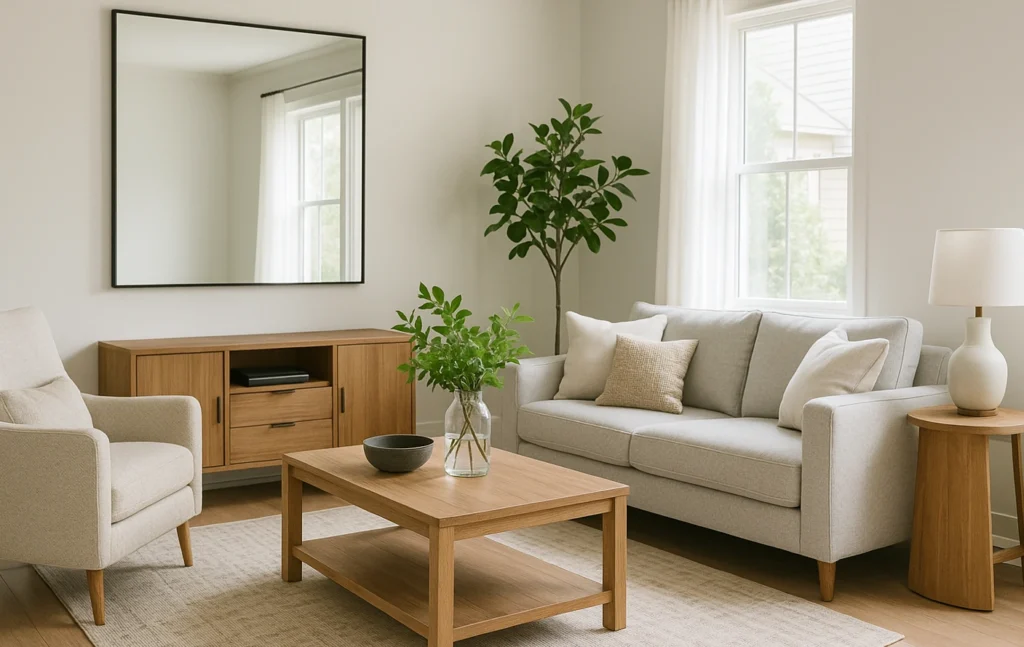
Furniture placement is equally important. Many homeowners make the mistake of pushing all their furniture against the walls, assuming it will create more room. In reality, floating your sofa or chairs a few inches away from the walls makes the layout feel intentional and less cramped. Opt for pieces with exposed legs, slim arms, and minimalist frames—these allow light to pass through and avoid the visual heaviness that bulky furniture creates. Multi-functional furniture is also a lifesaver in tight spaces. Think storage ottomans, nesting tables, and sofas with built-in compartments.
Mirrors are one of the simplest yet most effective tools for expanding visual space. A well-positioned mirror reflects natural light, amplifies your view, and gives the illusion of depth. Placing a large mirror opposite a window instantly brightens the room and makes it feel twice as spacious. A gallery wall of smaller mirrors can also add artistry while serving the same visual purpose.
Lighting plays a crucial role in preventing a small living room from feeling boxed in. Relying solely on overhead lighting creates shadows that can make your space appear smaller. Instead, use layers of lighting—floor lamps, table lamps, wall sconces, and soft accent lighting—to brighten dark corners and evenly illuminate the room. This layered approach distributes attention throughout the room rather than concentrating it in one spot.
Decluttering is another essential design principle. Small spaces demand intentional organization. Keep surfaces clean, avoid oversized décor pieces, and choose storage solutions that blend into your design. Built-in shelves, floating cabinets, or baskets are practical ways to reduce clutter without sacrificing style. When your living room feels orderly, it instantly feels larger.
Textures and materials can also influence how big your living room appears. Light, airy fabrics—like linen curtains or cotton throws—make a space feel breathable. Avoid heavy drapes that block natural light and visually weigh down the room. Transparent elements such as glass tables or acrylic chairs maintain openness because they don’t disrupt lines of sight.
Don’t overlook the importance of flow. Every room should have a natural pathway for movement. Arrange furniture in a way that allows you to walk through the space easily, without navigating around obstacles. Rugs can help define areas while making the layout feel cohesive. Choose a rug large enough to anchor your main pieces rather than one that floats awkwardly in the center—it actually makes the room appear bigger, not smaller.
When refreshing your living room, many homeowners also consider updating other areas of the home. It’s quite common to explore improvements in adjacent or high-traffic spaces. For instance, understanding bathroom renovation cost can help you plan cohesive home upgrades that maintain a consistent design style. This type of research acts as a helpful secondary reference if you’re thinking about larger home improvements beyond just the living room.
Ultimately, small living rooms have incredible potential when approached with creativity and intention. With smart color choices, the right furniture, thoughtful lighting, and a balance of style and practicality, your space can feel significantly larger and more welcoming. Even minor adjustments can transform your living room into one of your favorite places to relax and entertain.